I’m sorry that you have had to endure the pain for so long. From a medical perspective, what you are describing is what we call "Takotsubo Cardiomyopathy." It is diagnosed via echocardiogram, but is not often seen on ECG. it’s also called a "stress induced cardiomyopathy." Where cardiomyopathy just means there is pathology in the heart muscle.
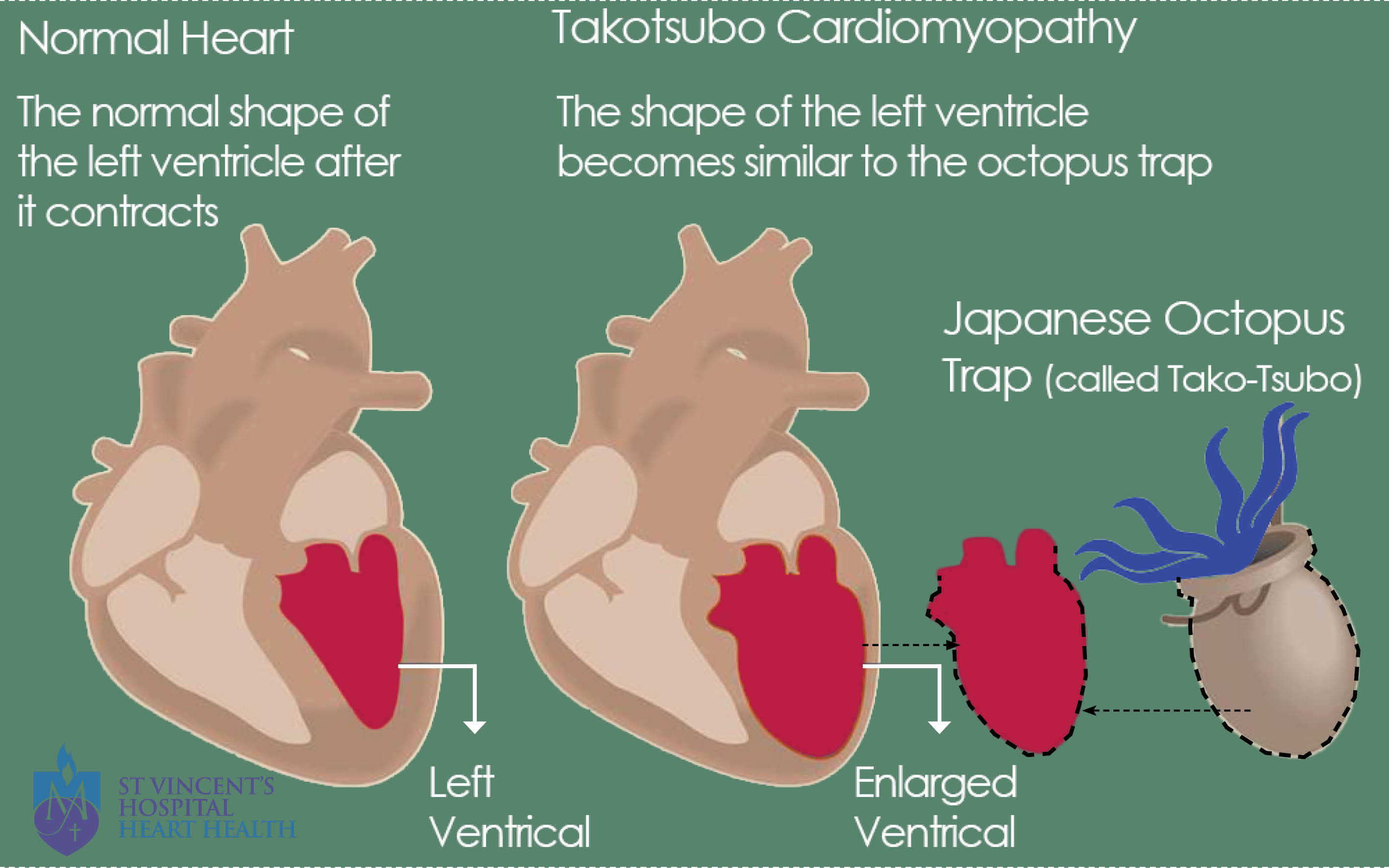
What it looks like on echocardiogram is a sort of ballooning of the left ventricle. This is the heart chamber responsible for squeezing oxygenated blood out of the heart and into the systemic circulation - to your brain, and organs, and muscles etc.
The heart works on a curve we call the Frank-Starling curve. It relates the degree of stretch of muscle to the ejection fraction of blood. There is a sweet zone, where just the right amount of stretch produces the best ejection, anything less than that, or anything more than that leads to less blood ejected from the heart in each beat. This is called heart failure. The severity is on a scale.
Most heart failure is ischemic - that means it’s due to lack of blood flow to the heart muscle, usually caused by coronary artery disease from long-standing hypertension, diabetes, high cholesterol, obesity, smoking etc. Some heart failure is due to viral infections, or autoimmune disease etc.
Takotsubo is a unique cause of heart failure. As you mentioned, stress (physical or emotional) can cause a stress reaction which dilates the apex of the left ventricle. This causes it to dilate past the sweet-zone on the Frank-Starling curve and causes a decreased amount of blood to eject from the heart. So to put it another way, broken heart syndrome / Takotsubo cardiomyopathy is a legitimate form of heart failure.
Often, it is just temporary and we can see the heart recover. But it does require management and follow up with a cardiologist. My ICU is frequented by people suffering from this condition. You are 100% correct that it is very real, potentially dangerous, and mimicks a heart attack.
If you are experiencing significant stress (who here hasn’t), and you have symptoms of a heart attack, please call 911 immediately. If your ECG is normal, please ask them to consider an echocardiogram. Most ED physicians these days are capable of an informal bedside ultrasound we call POCUS (point of care ultrasound), if they notice a dilated left ventricle then can obtain a formal echocardiogram and you will be seen by a cardiologist.
For funsies, Takotsubo means octopus trap in Japanese. Those traps (I’ll see if I can attach one from google), appear dilated like the heart does.
My heart goes out to anybody suffering from this condition. The good news is that it’s treatable, but it can be overlooked if your physician isn’t looking for it. Just another testament to the enormous power our emotions and minds have over our physical health. Infidelity sucks.
[This message edited by justsendit at 3:54 PM, Thursday, May 21st]